
Health & Fitness
How Body Fat Percentage Is Estimated
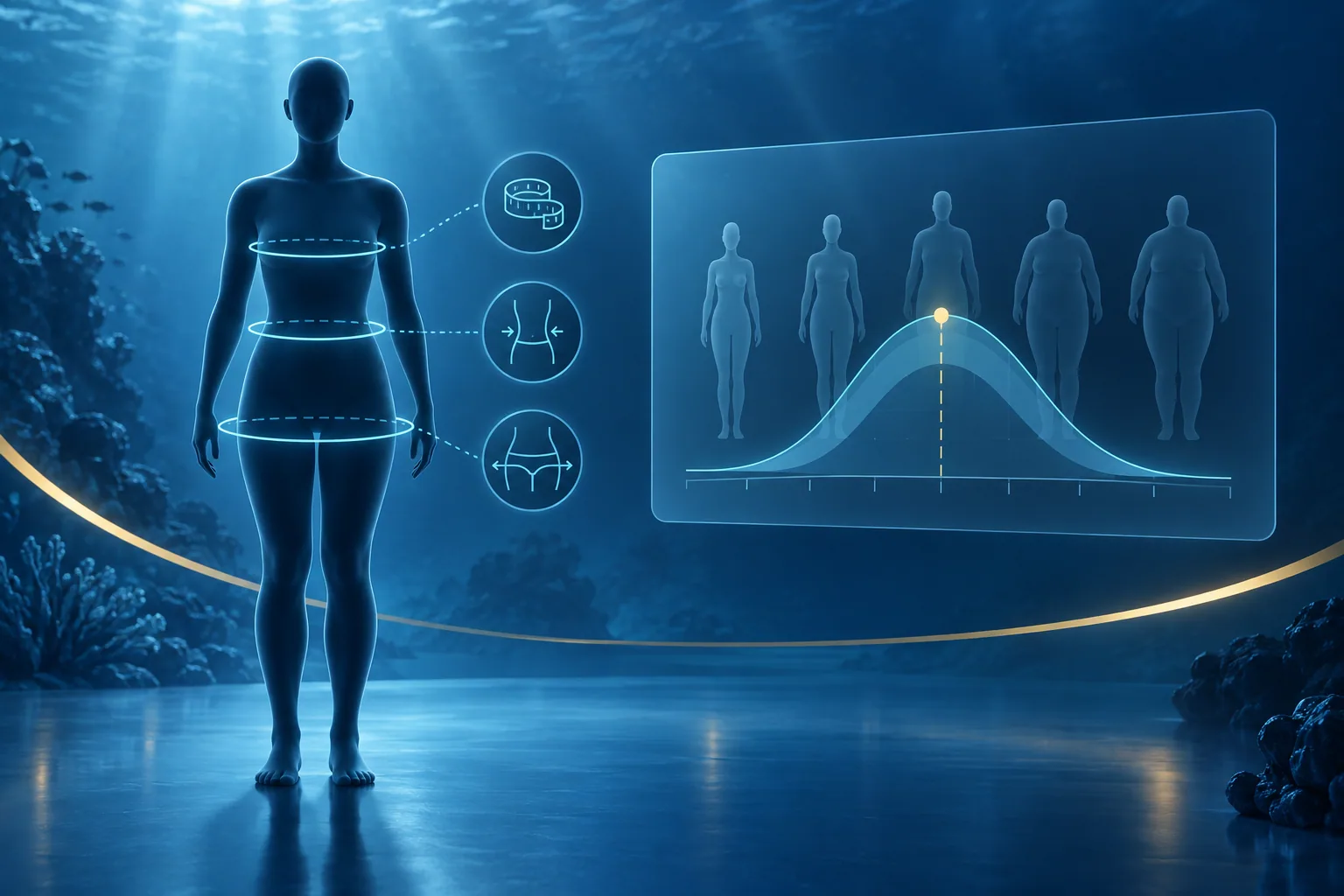
Body-fat percentage can be measured or estimated in several ways. CalcOcean uses a BMI-, age- and sex-coefficient equation for adults; it is a statistical estimate, not a direct measurement, diagnosis or personal health assessment.
CalcOcean Editorial TeamPublished 10 min read
Quick answer: the calculator predicts rather than measures
The CalcOcean tool first calculates adult BMI from weight and height, then applies a published prediction equation using BMI, age and a sex coefficient. The output is an estimate of body-fat percentage for a statistical context. It does not see fat tissue, distinguish where fat is stored or account directly for muscle, bone, hydration, ethnicity, training status or medical history.
Use the body fat calculator to explore the equation and its assumptions. Do not use the result to diagnose a condition, prescribe a diet or judge a person’s health or appearance. The CDC emphasizes that BMI is a screening measure and does not directly measure body fat.
Understand the equation used
A commonly cited adult prediction has the form: estimated body-fat percentage = 1.20 × BMI + 0.23 × age − 10.8 × sex coefficient − 5.4, with the coefficient defined by the original model. The equation was derived from group data. It summarizes an average relationship and leaves individual prediction error.
Changing a coefficient or using another published equation can change the estimate. A calculator should state the formula rather than displaying the result as an observed fact. The original research population, age range and measurement reference affect where a prediction performs better or worse.
Calculate BMI correctly before prediction
Metric BMI equals weight in kilograms divided by height in metres squared. A person who weighs 72 kilograms and is 1.75 metres tall has BMI about 23.51. Unit errors are amplified because height is squared. Entering centimetres as metres would make the result meaningless.
The BMI calculator and BMI guide explain units and screening limitations. Preserve full precision for BMI inside the body-fat equation, then round the final estimate. Rounding BMI first can create a small avoidable difference.
Work through an illustrative adult example
For an illustrative 35-year-old with BMI 24 and the equation’s male coefficient set to 1, the estimate is 1.20 × 24 + 0.23 × 35 − 10.8 − 5.4 = 20.65%. With the coefficient set to 0, the same BMI and age produce 31.45%. These are equation outputs, not measured tissue percentages.
The large coefficient effect is a reminder that the model encodes group-level assumptions. It does not represent every body or identity. Use the field label exactly as defined by the formula, and avoid turning the result into a statement about gender identity, fitness, attractiveness or worth.
Why BMI cannot identify composition directly
BMI relates mass to height but cannot separate fat mass from lean tissue. Two adults with the same BMI can have different muscle, bone and fat proportions. The CDC notes that BMI does not distinguish fat, muscle and bone or indicate fat distribution. A prediction built partly from BMI inherits those limitations.
Athletes, older adults and people with unusual body composition may see particularly poor individual agreement. Even when a model is reasonably correlated across a group, an individual prediction can differ from a direct assessment. Correlation does not make every estimate accurate.
Compare estimation and measurement methods
Other approaches include skinfold measurements, circumference equations, bioelectrical impedance, air displacement, underwater weighing and dual-energy X-ray absorptiometry. Each has assumptions, operator requirements, equipment limits and day-to-day variability. No home method should be described as perfectly exact.
Hydration, meals, exercise and device algorithms can affect impedance readings. Skinfold results depend on technique and equation. Imaging-based assessments require trained interpretation and are not automatically necessary for routine health decisions. A healthcare professional can explain which information, if any, is useful for a specific concern.
Treat repeat measurements consistently
If tracking an estimate, keep method, device, units and conditions as consistent as practical. A change between two different methods can reflect method bias rather than body change. Small day-to-day movements may come from hydration, measurement noise or rounding.
Look for a sustained pattern only when tracking is appropriate and not distressing. Keep the raw inputs and dates. Do not respond to a tiny change by making extreme diet or exercise adjustments. When monitoring creates anxiety or compulsive behavior, stop and seek qualified support.
Avoid universal body-fat categories
Category tables differ by source, method, age, sex definition and purpose. A percentage alone does not diagnose health. CalcOcean avoids presenting one universal set of labels as medical truth. A clinician considers history, symptoms, blood pressure, laboratory results, behaviors and other findings.
Do not compare yourself with images or social-media claims tied to unverified percentages. Visual appearance is affected by lighting, posture, muscle distribution and editing. A numerical estimate should never be used to shame someone or determine their value.
Know who should not rely on this adult estimate
The equation is not designed as a pediatric growth assessment. Children and adolescents require age- and sex-specific growth references and professional interpretation. Pregnancy, major fluid shifts, illness and other circumstances can also make generic body-composition predictions unsuitable.
If you have a medical condition, are pregnant, are under 20, take medicines affecting fluid or weight, or have concerns about eating or body image, discuss appropriate assessment with a qualified healthcare professional. Do not adapt the adult formula by inventing a correction factor.
Distinguish body-fat estimate from calorie needs
Body-fat percentage and energy expenditure answer different questions. The body-fat equation does not calculate resting metabolism or prescribe calorie intake. A calorie equation can be uncertain even when body composition is measured. Do not chain several estimates together and present the final number as highly precise.
Read BMI vs BMR for the distinction between body-size screening and resting-energy prediction. Each model has its own inputs and limitations. Combining them does not remove uncertainty.
Common mistakes with body-fat calculators
Common errors include mixing pounds with kilograms, using centimetres as metres, entering an age outside the model’s intended context, selecting a coefficient without reading its definition, and comparing outputs from different equations as though they were identical measurements. Another is reporting many decimal places.
Check units and formula, recalculate BMI, and identify the exact equation. Treat a result below zero or implausibly high as a sign that inputs or model applicability should be reviewed, not as a literal biological claim. Software should validate ranges, but validation cannot establish personal suitability.
Communicate uncertainty honestly
Say “the equation estimates” rather than “your body fat is.” Include formula, inputs, date and limitations. Avoid claiming a medical review or credential that did not occur. CalcOcean’s shared editorial byline describes how educational content is prepared and does not imply individualized clinical oversight.
For research or clinical decisions, use validated protocols and qualified professionals. A transparent estimate can help explain mathematics, but it cannot replace examination or a measurement method appropriate to the question.
Medical and wellbeing disclaimer
This content is general education, not medical diagnosis, treatment, nutrition advice or a recommendation to change weight. Body composition is only one possible piece of health information. Seek care for health concerns and use emergency services when urgent symptoms require them.
People with current or past eating disorders, body dysmorphia or distress around tracking may benefit from avoiding body-composition tools and seeking professional support. No calculation should override wellbeing, prescribed care or individualized guidance.
Understand prediction error at the individual level
A model can perform acceptably on average while missing substantially for one person. Prediction error includes unexplained biological variation, measurement error and differences between the original study group and the user. Reporting only the central estimate hides that uncertainty.
Do not compare two estimates separated by one percentage point and assume real tissue changed. Without a validated error range and consistent measurement, that difference may be noise. Avoid ranking people from approximate outputs.
Separate health risk from appearance
Body-fat distribution, blood pressure, laboratory markers, fitness, sleep and medical history can matter independently of an estimated total percentage. No single body-composition number defines health. Appearance cannot reliably reveal a precise percentage either.
Use respectful language and avoid before-and-after promises. The tool is not designed for appearance scoring, sports selection or employment decisions. Discriminatory use can cause harm and may violate rules or law.
Why hydration affects some methods
Bioelectrical impedance estimates body composition partly from how current travels through the body. Hydration, meals, recent exercise and temperature can influence readings. This does not mean the device is useless, but comparisons require consistent conditions and realistic expectations.
The BMI-based CalcOcean equation does not directly measure impedance, yet weight can also vary with hydration. A changed input can shift the prediction without corresponding to equal fat change. Preserve context around repeat measurements.
Discuss goals without prescribing a number
There is no universal body-fat target appropriate for every adult. Sport, reproductive health, age, illness and personal wellbeing can alter what is safe or useful. Generic category charts should not replace clinical evaluation.
If a clinician recommends monitoring, ask which method and range matter and why. A transparent goal should include health purpose, measurement method and review plan—not only a number from an online equation.
Data and dignity
Body measurements are sensitive. Do not publish another person’s estimate or use it for ridicule. When an organization collects such data, access and retention should be limited to a legitimate purpose and applicable law.
CalcOcean’s calculation needs only the displayed inputs; it does not need photographs or identity documents. Minimize what you share. Accuracy and privacy are both part of responsible measurement practice.
Compare equations without declaring a winner
Different body-fat equations may use waist measurements, skinfolds, BMI or demographic coefficients. Each was developed and validated in particular groups. A lower or higher output is not automatically more accurate, and averaging formulas has no guaranteed scientific meaning.
Compare the intended population, reference method and reported error. If an equation does not fit the user’s context, the honest response is uncertainty—not selecting the preferred number.
Measurement change versus real change
Suppose an estimate moves from 24% to 23.5%. The difference is half a percentage point, but input rounding or ordinary measurement variation may be as large. Without information about repeatability, the change should not be described as a confirmed reduction in fat tissue.
Longer patterns under consistent conditions can be more informative, yet professional interpretation may still be needed. Preserve values rather than smoothing them to fit a desired story.
Use neutral language in reports
Describe inputs, method and limitations without labels that imply character or attractiveness. “BMI-based equation estimate” is more accurate than “fitness level.” Avoid universal “ideal” claims and use person-respecting language.
If content is intended for a broad audience, include the adult-only scope and medical disclaimer near the result, not hidden at the bottom. Accessibility includes emotional safety as well as readable design.
A final responsible-use checklist
Confirm age scope, units, coefficient definition and formula. State that the result is an estimate, do not diagnose, and do not compare people. Stop if use causes distress. Seek a qualified professional for health questions.
An equation is most useful when its limits are as visible as its output. The goal is mathematical understanding, not surveillance of bodies.
Decide whether calculating is useful at all
Before entering measurements, ask what decision the estimate will support. If no responsible action depends on the number, calculation may add anxiety without benefit. Health-promoting behaviors and medical care do not require a precise body-fat percentage for every person.
A choice not to measure is valid. When measurement is clinically relevant, a qualified professional can recommend an appropriate method and interpretation. CalcOcean explains one equation so users can understand its limitations; it does not encourage routine body surveillance.
Frequently asked questions
Does a body-fat calculator measure body fat?
No. CalcOcean uses a statistical equation based on BMI, age and a formula-defined sex coefficient. The output is a prediction, not a direct measurement or diagnosis.
Why can two body-fat calculators disagree?
They may use different equations, populations, coefficients, measurement inputs and rounding. Even devices that attempt measurement have method-specific uncertainty.
Is BMI the same as body-fat percentage?
No. BMI is weight relative to height and does not separate fat from muscle or bone. Some prediction equations use BMI as one input to estimate body fat.
Can athletes use the estimate accurately?
Individual error may be larger when body composition differs from the model’s typical population, including highly muscular people. A generic result should not be treated as a precise assessment.
Can children use this adult equation?
No. Children and adolescents require growth-appropriate assessment and professional interpretation. Do not adapt an adult formula with an invented correction.
How should I track changes?
If tracking is appropriate, use the same method and similar conditions, focus on longer patterns, and avoid reacting to small fluctuations. Stop if tracking causes distress and seek qualified support.
Sources and calculation notes
About the author
CalcOcean Editorial TeamThe shared publishing byline for CalcOcean educational explanations and checked examples.
Dates describe publication changes, not independent specialist review.